
Intensive outpatient program billing for mental health, substance use, and dual-diagnosis programs, from per diem coding to concurrent review
Our outpatient therapy billing services include billing and revenue cycle management for outpatient therapy programs targeting mental health issues, substance use disorders, and co-occurring disorders. The work is harder than office-based therapy billing. Per diem codes differ by payer. Authorizations are approved a few days at a time. Medicare rules change by setting. A billing team trained on outpatient therapy usually misses all three. A2Z Medical Billing Services builds each claim around the payer contract, the authorization calendar, and the setting. Xvu IOP billing and revenue cycle management services for freestanding licensed assisted living facilities and community mental health centers.
IOP billing services manage the revenue cycle for programs that deliver 9 to 19 hours a week of structured treatment, from benefits verification and authorization through per diem coding, claim submission, denials, and payment posting.
The term IOP day is used among most payers, wherein one unit is billed as one day. Per diem pays for the complete day of treatment received by the patient, and coding for the same will depend on the program type and method used by the payer to compensate for the expenses incurred by the IOP program. As usually group therapy sessions along with individual therapy sessions and medication management take place on the IOP program in a day, only one billing unit is used. Medicare works differently. It takes each component service on the claim and pays a per diem based on the number of services delivered that day.
The IOP services billed by us include those being offered to patients with mental health problems or substance use disorders, as well as with dual diagnosis. The clients we serve include both adults and adolescents, those attending programs that last for a day or night, and those who involve a transition of patients from PHP care to IOP.

There are three major differences from the standard outpatient procedure regarding the billing of an intensive outpatient program. The billable unit is the program day, authorizations cover a few days at a time, and facility and professional claims can run side by side. Our behavioral health billing services team builds around all three.
| Code | What it describes | Billing note |
|---|---|---|
|
S9480
|
Intensive outpatient psychiatric services, per diem
|
Commercial and many Medicaid plans. Not used by Medicare. Typically paired with revenue code 0905 on a UB-04
|
|
H0015
|
Alcohol and/or drug services, intensive outpatient (not less than three hours a day, three days a week, and individual plans).
|
Commercial and Medicaid SUD IOP. It is common that the facility bills an IOP along with code 0906. Nevertheless, certain payers use code 0905 based on their own specifications. Molina Payment Policy 260 lists H0015, S9480 and 0905 together
|
|
H2036
|
Alcohol and/or other drug treatment program, per diem
|
Used by some state Medicaid programs in place of H0015. Payer specific
|
S9480 describes psychiatric IOP, and H0015 describes alcohol and drug IOP. H0015 is defined as at least 3 hours a day, 3 days a week, under an individualized plan. Some state Medicaid programs use H2036, an alcohol and other drug treatment per diem, in place of H0015. The payer contract decides which code applies to your program and which revenue code goes with it. Medicare does not pay IOP under either code. Check both before the first claim.
Revenue code 0905 is used for the billing of psychiatric intensive outpatient services. Revenue code 0906 refers to the billing of chemical dependency intensive outpatient services. Some payers use 0905 for both program types. Molina Payment Policy 260 S9480. Medicare FQHC and RHC IOP claims require 0905 with condition code 92. The contract is the final word on commercial claims.
Some payers pay component CPT codes and no per diem. Billing both for the same day is a duplicate or bundling denial. Among other services, group psychotherapy (90853) is supposed to be the main one; admission assessments are made with the help of 90791 or 90792 codes, family sessions with 90846 or 90847 codes, while the psychological testing process is done with the help of either 96130 or 96131 codes. We confirm in each contract whether the payer pays a per diem, components, or both. We write that rule into our claim edits so it is applied to every claim. Our medical coding services team keeps the rule current.
Medicare began to provide coverage for intensive outpatient programs (IOP) effective January 1, 2024. All processes that require claim submission use condition code 92 to separate the mentioned services. Payments will be made on a per diem basis, which varies both according to the settings and the number of services provided that day.
This section is as current and valid as of November 2026 and is based on the final ruling of the OPPS for CY 2026. To develop the new rates for CY 2026 for IOP and PHP, the CMS used data collected within one active year in the fields of both IOP and PHP from the claims of 2024. The rates for both types will apply for the dates of services offered beginning on January 1, 2026.
| Setting | Type of bill | Condition code | Revenue codes | How Medicare pays |
|---|---|---|---|---|
|
Hospital outpatient department |
013x
|
92
|
A revenue code and HCPCS for each service (0900 series, 0905, 043x, 0250 and others)
|
OPPS per diem: APC 5861 (3 services a day) or 5862 (4 or more)
|
|
Community mental health center
|
076x
|
92
|
Same component method
|
APC 5851 (3 services) or 5852 (4 or more)
|
|
Non-excepted off-campus hospital IOP
|
013x
|
92
|
Same component method
|
Paid under the PFS at the CMHC APC 5851 / 5852 rate (Noridian)
|
|
Critical access hospital |
085x |
92 |
Same component method |
101% of reasonable cost (First Coast) |
|
FQHC |
077x |
92 |
0905; 0519 for the Medicare Advantage wrap-around |
IOP per diem rate, updated for CY 2026 effective 1 January 2026 |
|
RHC |
071x |
92 |
0905 |
Confirm the current IOP payment method with your MAC |
Condition code 92 identifies a Medicare IOP claim. The specific type of the bill depends on the respective setting, as seen in the table. Condition code 41 of the bill type 076x still indicates the PHP programs (as noted in MLN Matters MM13222) and separates both types of programs in the claims.
Medicare counts the services delivered each day. A day with 3 services and a day with 4 or more land in different payment tiers. A service missing from the note or the claim can move the whole day to a different tier. We count the services before the claim is built and tie each one to the note.
A physician must certify that the patient needs at least 9 hours per week of therapeutic services, documented in an individualized treatment plan (MM13264). Recertification is due at intervals set by the provider and no less often than every 60 days (42 CFR 424.24).
FQHCs and RHCs bill IOP on their own type of bill with revenue code 0905. The FQHC IOP per diem rate is updated each year, and the CY 2026 rate took effect on 1 January 2026. Opioid treatment programs follow a separate Medicare pathway, so confirm the current billing method with your MAC before you submit.
Commercial plans and Medicaid programs set their own IOP codes, revenue code pairs, hour minimums, and authorization rules, and they rarely match Medicare or each other. Check the contract for every payer you bill. Ask each one for the IOP hour minimum, the covered diagnoses, the revenue code pairs, and the review schedule in writing.
Payers include Medicare Advantage plans, state Medicaid programs and managed care organizations, Optum and United Behavioral Health, Carelon Behavioral Health, Aetna, Cigna (Evernorth), Blue Cross Blue Shield plans, Magellan and TRICARE. Each one publishes its own rules. Molina Payment Policy 260 is one example of a published IOP payment policy.
If your IOP is out of network for a patient, a single case agreement can set the rate for that admission. If a plan limits IOP more tightly than it limits medical benefits, the mental health parity law (MHPAEA) gives you a basis to challenge it. Our insurance verification services confirm IOP benefits and hour limits before admission, and our credentialing services cover payer enrollment.
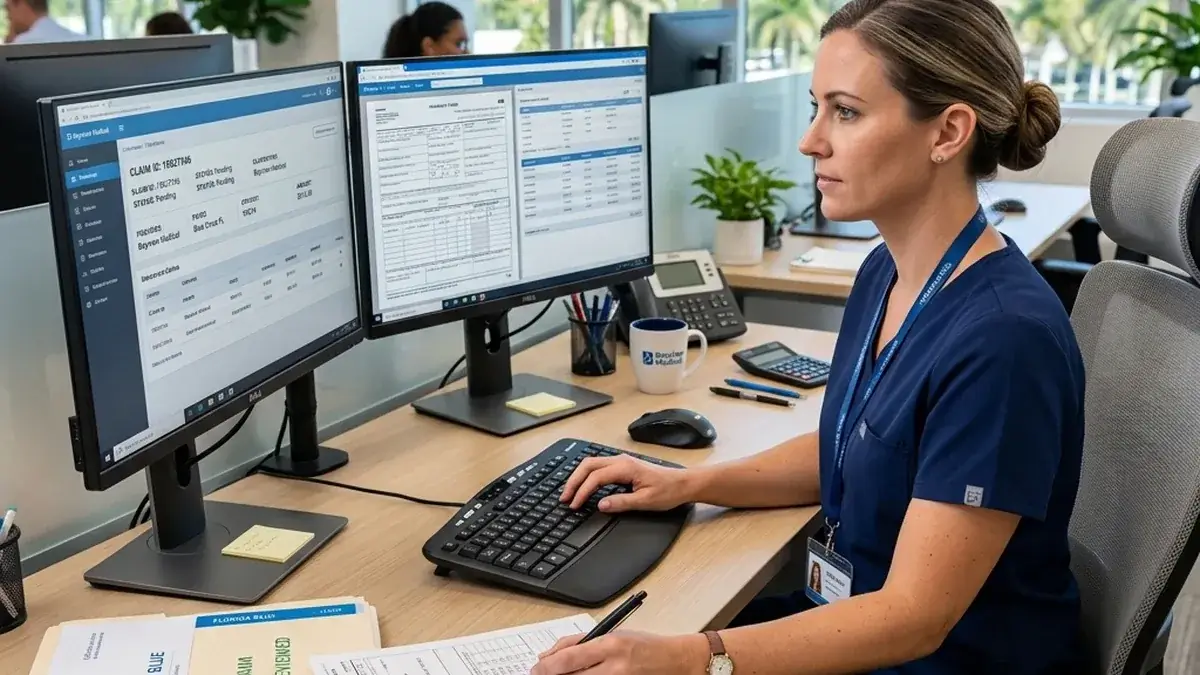
IOP authorization depends on showing that the patient meets level-of-care criteria, usually ASAM for substance use disorder and LOCUS or payer criteria for mental health, and keeps meeting them at each review.
| Level | Weekly clinical hours (adults) | Billing relevance |
|---|---|---|
|
ASAM 1.5 Outpatient therapy
|
Fewer than 9
|
Not IOP. Billed with time-based CPT
|
|
ASAM 2.1 Intensive outpatient
|
9 to 19 (6 to 19 for adolescents)
|
The IOP level. H0015 / S9480 per diem, or Medicare IOP
|
|
ASAM 2.5 High-intensity outpatient
|
20 or more
|
Called partial hospitalization in the 3rd Edition. PHP-level billing
|
|
ASAM 2.7 Medically managed intensive outpatient |
IOP intensity plus medical management |
New in the 4th Edition. Covers withdrawal and medication initiation in an outpatient setting. Payer billing treatment varies |
|
Medicare IOP |
At least 9, physician certified |
Condition code 92 |
|
Medicare PHP |
At least 20 |
Condition code 41 on CMHC claims |
The ASAM Criteria 4th Edition renamed Level 2.5 and added Level 2.7. Payers and states are moving from the 3rd to the 4th Edition on different timelines. Programs whose documentation still uses 3rd Edition language may see authorization friction. Level 2.7 adds medical management in an outpatient setting, and payers treat it differently, so check each payer before you bill it.
Many payers use LOCUS for adults and CALOCUS-CASII for children and adolescents. Your reviewer will ask for the score, so the chart should include it, and a missing score or a vague progress note invites a denial.
Hours attended against hours authorized.
Progress against treatment plan goals.
ASAM dimension or LOCUS scores.
The step-down plan.
Ask for written confirmation of each authorization, including the dates, the level of care, and the number of days. Documentation that matches the authorized level protects the day if a payer reviews it later. Billing and utilization review must share one calendar of authorized days. Most lost IOP revenue is days delivered after an authorization lapsed. Our prior authorization services team keeps that calendar and starts each extension early.

IOP claims are denied for a short list of reasons, and most trace back to the authorization, the claim data, or the payer’s bundling rules. You may recognize two or three of these from your own remittances. Each one ties to a check we run before the claim goes out, and most can be prevented with an authorization calendar and setting-specific claim edits.
The day was delivered after the authorized window closed.
Review notes did not support continued IOP level.
Condition code 92: the type of bill or a revenue code is missing or wrong.
An individual CPT was billed on a day the payer treats as all-inclusive.
A per diem was billed twice, or with component codes.
The facility or clinician is not enrolled for IOP with that payer.
Claims were held during an authorization dispute.
Our IOP billing services cover every step from benefits to payment, and each step is built around per diem rules, authorization calendars, and Medicare tier logic. We work inside your existing behavioral health EHR and practice management system, so your clinicians keep the workflow they know.
Mental health, substance use disorder, and dual-diagnosis IOPs each bill differently. The code, the review criteria, and the privacy rules change with the program type.
We confirm the program type on the authorization matches the program you bill. Mental health IOPs commonly bill S9480 and face LOCUS-based reviews for adults and CALOCUS-CASII reviews for younger patients. See our mental health billing services and psychiatry billing services.
SUD IOPs, often searched as substance abuse IOP billing, commonly bill H0015 and face ASAM level reviews. Payers often pair H0015 with revenue code 0906, and some specify 0905. Disclosures to payers also fall under 42 CFR Part 2 consent rules. See our substance abuse billing services.
Dual-diagnosis programs treat both conditions in one program. Both conditions go in the treatment plan, but the claim carries one per diem for the day. We sequence the primary diagnosis in ICD-10-CM, so it matches the diagnosis in the authorization.

The difference between IOP and PHP billing is weekly intensity, and that difference changes the codes, the authorization criteria, and the Medicare condition code you use on the claim.
Intensity decides the level of care. IOP programs run 9 to 19 hours a week, and PHP programs run 20 or more. ASAM places IOP at Level 2.1 and high-intensity outpatient, called partial hospitalization in the 3rd Edition, at Level 2.5. On Medicare claims, IOP carries condition code 92, and PHP from a CMHC carries condition code 41.
| IOP | PHP | |
|---|---|---|
|
Weekly hours |
9 to 19
|
20 or more
|
|
ASAM level
|
2.1
|
2.5
|
|
Medicare condition code
|
92
|
41 on CMHC claims
|
|
Common commercial codes
|
S9480 / H0015
|
H0035 / payer per diem
|
|
Medicare per diem APCs
|
5851 to 5852 and 5861 to 5862
|
5853 to 5854 and 5863 to 5864 |

You can set up IOP billing before your first admission or move it from another company in about 2 to 4 weeks. Either way, the payer contract, the authorizations, and the open claims need to line up on day one.
A new IOP needs state licensure, a type 2 NPI and taxonomy code, Medicare enrollment where it applies, and payer contracts that name the IOP codes, revenue codes, and per diem rates. Credentialing takes lead time, so start it before you set your first admission date. Work in this order: licensure and NPI first, then payer contracts and credentialing, then a test claim for each payer before the first admission.
We transfer open authorizations on day one so no program day goes unbilled. We work legacy AR to closure and review recent claims for unbilled or underpaid days. Onboarding takes about 2 to 4 weeks, depending on your system and the number of payers.
Outsourced IOP billing moves the claim work to us and keeps the clinical work with you. You keep treatment decisions and documentation. We take eligibility, authorization tracking, claims, denials, and posting.
IOP is hard to run in-house. One biller has to track per diem rules for each payer, authorization calendars for each patient, and Medicare tier logic for each day. Here is what we build into the work:
Payer-by-payer code and revenue code pairs, checked before a claim goes out.
One authorization calendar shared by billing and utilization review.
Claim edits that change with the setting and the type of bill.
Reports on authorized days against billed days.
Part 2 awareness when SUD records are involved.


We protect IOP records under HIPAA, and we handle substance use disorder records with the added limits of 42 CFR Part 2. Both shape who sees a claim and what a payer can receive.
Before we see any data, A2Z Medical Billing Services signs a business associate agreement with your program. We use role-based access and encrypted systems. Our staff uses their own accounts. So activity can be traced, and access is removed when a team member leaves. SUD treatment records from federally assisted programs fall under 42 CFR Part 2, which governs what can be disclosed to payers and requires patient consent for many disclosures. HHS issued the Part 2 final rule in February 2024, with compliance required by 16 February 2026.
