
Headaches are one of the most common complaints seen in clinics and hospitals across the United States. From primary care offices to neurology practices, pain management centers, and urgent care clinics, accurately documenting and coding headaches is critical, not only for patient care but also for compliance, research, and reimbursement.
While headaches may seem straightforward, they come in many forms: migraines, tension-type headaches, post-traumatic headaches, cervicogenic headaches, and other less common variants. Each type has specific characteristics and headache ICD-10 codes. Proper coding ensures that clinicians can provide precise treatment, bill correctly, and maintain compliance with healthcare regulations.
This guide provides a complete framework for coding and billing headache ICD-10 codes.
Understanding Why Headache Coding Is Crucial
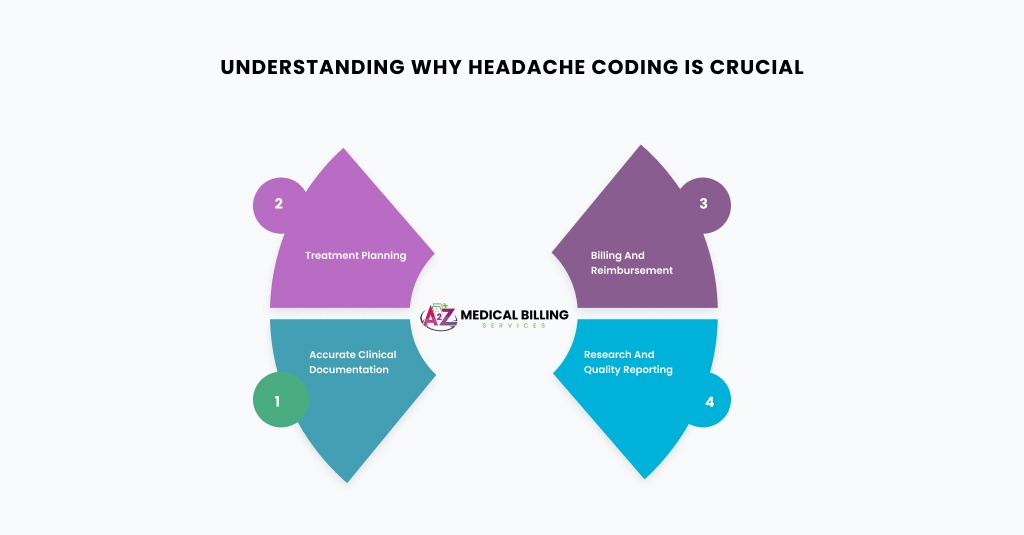
Headache coding is more than a box-checking exercise. It impacts multiple aspects of clinical and financial operations:
- Accurate Clinical Documentation – Proper coding communicates the exact type of headache, its severity, frequency, and underlying causes. For example, a neurologist evaluating chronic migraines can distinguish between migraine with aura and migraine without aura using specific ICD-10 codes.
- Treatment Planning – Headache codes guide treatment decisions. A chronic tension-type headache (G44.221) may require preventive therapy, whereas an episodic migraine (G43.019) might be managed with over-the-counter medications or abortive treatments.
- Billing and Reimbursement – Insurance companies increasingly demand precise coding. Generic codes like R51 (“Headache”) are often flagged during claims review, potentially leading to denials or delayed payments. Accurate coding improves cash flow and reduces administrative burden.
- Research and Quality Reporting – Accurate headache coding supports population health studies, clinical trials, and quality reporting programs. Institutions, such as neurology departments or headache specialty centers, rely on detailed ICD-10 coding to track patient outcomes and service utilization.
Key Insight for Providers: For primary care physicians, accurate headache coding helps refer patients appropriately. For neurologists and pain specialists, precise coding ensures eligibility for advanced therapies and inclusion in research. Urgent care and emergency providers benefit from documenting acute headaches to differentiate them from secondary causes that require immediate intervention.
Primary Headaches: Migraines
Migraines are among the most clinically complex headaches. They are typically intense, throbbing, and unilateral, often accompanied by nausea, vomiting, or sensory sensitivities.
ICD-10 Codes for Migraines
Migraines are coded under G43 in ICD-10, with subcategories for aura, status migrainosus, and intractability. Here’s a detailed breakdown:
- G43.019 – Migraine without aura, not intractable
This code applies to common migraines that are manageable and do not have complex features, such as aura or prolonged attacks. Documenting frequency and triggers helps justify treatment and follow-up. - G43.1 – Migraine with aura
- G43.10 – Not intractable
- G43.101 – With status migrainosus
- G43.109 – Without status migrainosus
- G43.11 – Intractable
- G43.111 – Intractable with status migrainosus
- G43.119 – Intractable without status migrainosus
- G43.4 – Hemiplegic Migraine
Characterized by temporary paralysis on one side of the body, this rare but severe form requires careful documentation of neurological deficits for coding and billing. - G43.9 – Migraine, Unspecified
Used when the clinical documentation does not fit other subcategories, though it should be used sparingly to avoid payer scrutiny.
Tension-Type Headaches
Tension-type headaches (TTH) are the most common primary headache in adults. They usually present as a persistent, dull pressure affecting both sides of the head.
ICD-10 Codes for Tension-Type Headaches
- G44.219 – Episodic, not intractable
These are mild to moderate headaches that occur sporadically. Documentation should note frequency, triggers (e.g., stress, sleep deprivation), and response to OTC medications. - G44.201 – Unspecified, intractable
Persistent headaches not responsive to standard treatments require documentation of all interventions attempted. - G44.221 – Chronic tension-type headache
Chronic tension headaches may require preventive therapy and behavioral interventions. Recording duration, severity, and impact on daily activities strengthens coding and reimbursement claims.
Secondary Headaches: Cervicogenic and Post-Traumatic
Secondary headaches arise from identifiable medical conditions. They require linking to the underlying cause for accurate coding and reimbursement.
Cervicogenic Headaches
- ICD-10 Code G44.86
Cervicogenic headaches originate from neck pathology, such as degenerative cervical spine disease or muscle dysfunction. Pain often radiates from the neck to the head, mimicking tension-type headaches.
Documentation Tip: Include imaging results, neck examination findings, and specific anatomical source to support coding accuracy.
Post-Traumatic Headaches
- ICD-10 Code G44.309 – Post-traumatic, unspecified, not intractable
These headaches are common after concussions or head injuries and require thorough documentation of injury history, onset, and progression.
Insurance and Reimbursement
Insurance payers often scrutinize headache claims due to the high prevalence of non-specific headaches. Correct coding facilitates faster approvals and reduces denials:
- Primary Headaches: Payors require detailed documentation of frequency, severity, and treatment response for coverage of preventive therapies.
- Secondary Headaches: Always link the headache to an underlying condition (trauma, cervical spine disorder, etc.).
- Medical Necessity: Include justification for advanced treatments or imaging studies.
- Telehealth Visits: Documentation should reflect virtual assessments and patient-reported findings.
Primary care and urgent care practices must document symptoms and clinical reasoning carefully to avoid misinterpretation by insurance reviewers. Neurologists and pain management centers should focus on intractable and chronic headaches to secure coverage for specialized therapies.
How to Bill for Headache Visits: A Step-by-Step Guide
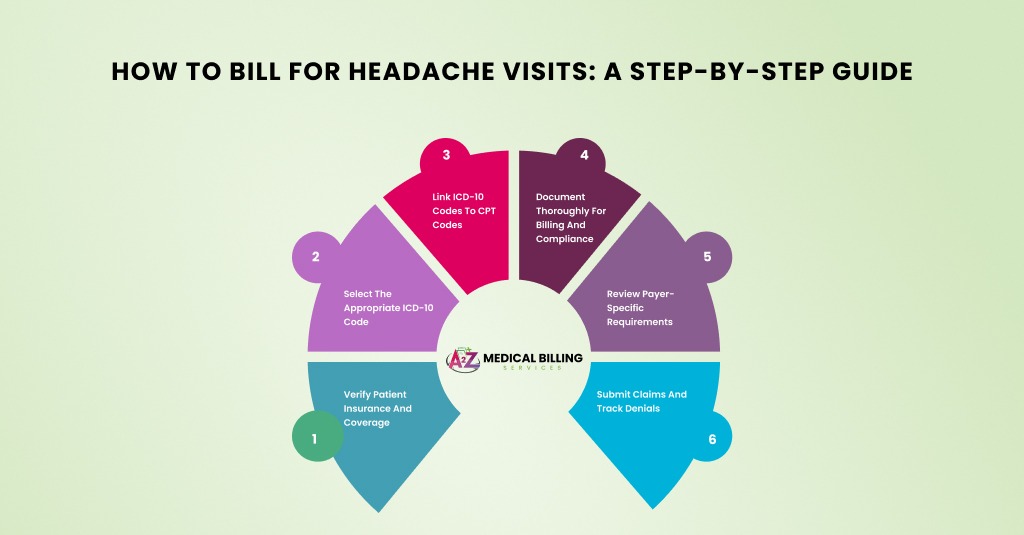
Billing for headache-related visits is not just about attaching an ICD-10 code to a claim. Providers must combine accurate coding, thorough documentation, and payer-specific requirements to ensure smooth reimbursement. Below is a detailed guide to billing headache visits effectively.
1. Verify Patient Insurance and Coverage
Before coding or submitting claims, confirm:
- Insurance type – Medicare, Medicaid, or commercial payer
- Coverage for headache therapies – Some payers require prior authorization for advanced treatments, such as Botox, CGRP inhibitors, or imaging studies
- Patient cost-sharing – Document deductible, copay, or coinsurance responsibilities
2. Select the Appropriate ICD-10 Code
Choose the most specific ICD-10 code based on:
- Headache type – migraine (G43), tension-type (G44.2), post-traumatic (G44.309), or cervicogenic (G44.86)
- Severity and chronicity – acute, chronic, intractable
- Presence of aura or neurological symptoms – for migraines
3. Link ICD-10 Codes to CPT Codes
For billing purposes, ICD-10 codes must correspond to the appropriate CPT (Current Procedural Terminology) codes for the service provided. Common scenarios:
- Evaluation & Management (E/M) Visits:
- 99202–99205 for new patients
- 99212–99215 for established patients
- Procedures and Treatments:
- Botox for chronic migraines – 64615
- Nerve blocks – 64450–64520
- Imaging (if medically necessary) – 70450, 70551, 72141
Always ensure the ICD-10 code justifies the CPT code billed. Payers often review claims for medical necessity. For example, billing Botox (64615) for G43.109 (migraine with aura, not intractable) may trigger denial without documentation of chronic or intractable headaches.
4. Document Thoroughly for Billing and Compliance
Claims are only as strong as the documentation behind them. Key points for headache visits include:
- Headache onset, frequency, duration, triggers
- Presence of aura or neurological deficits
- Response to previous therapies (especially for chronic or intractable headaches)
- Link to secondary causes if applicable (trauma, cervical spine issues, infections)
- Treatment plan, including medications, procedures, or lifestyle interventions
Emergency and urgent care providers should document “red-flag” symptoms, such as sudden severe headaches, vision changes, or neurological deficits, to justify urgent care billing and ensure compliance.
5. Review Payer-Specific Requirements
Different payers have unique rules:
- Medicare: Requires documentation of severity, chronicity, and impact on daily function for coverage of advanced migraine therapies
- Commercial Payers: May require prior authorization for imaging, Botox, or CGRP therapy
- Medicaid: Often restricts the frequency of specialist visits or advanced treatments
Maintain a payer reference guide for headache codes and corresponding CPT codes to reduce denials and streamline claims submission.
6. Submit Claims and Track Denials
- Submit claims electronically for faster processing
- Monitor for denials due to:
- Incorrect ICD-10 code
- Insufficient documentation
- Lack of prior authorization
- Appeal denials promptly with detailed clinical documentation
Assign staff or use a revenue cycle management (RCM) partner familiar with headache coding to follow up on denials. Practices that do this see significantly faster reimbursements and reduced write-offs.
Best Practices for Providers
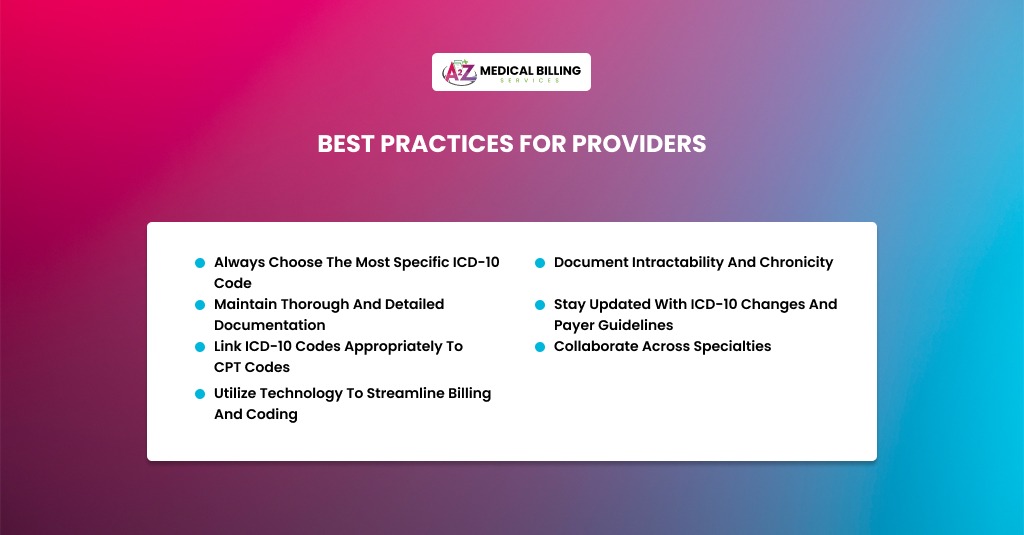
Managing headache patients requires more than identifying the type of headache. Providers must combine precise documentation, accurate ICD-10 coding, and strategic billing practices to ensure compliance, optimize reimbursement, and deliver high-quality care. Below are actionable best practices for providers, written with real-world clinical and billing considerations in mind.
Always Choose the Most Specific ICD-10 Code
Generic codes like R51 (Headache) are easy to default to, but payers and audits increasingly require specificity. Use the appropriate primary or secondary headache code, such as G43.109 for migraine with aura (non-status migrainosus) or G44.221 for chronic tension-type headaches.
Specific coding reduces claim denials, supports medical necessity for advanced therapies, and ensures accurate clinical documentation for ongoing patient care.
Maintain Thorough and Detailed Documentation
Proper documentation is the foundation of accurate coding and billing. Providers should consistently record:
- Headache onset, frequency, and duration
- Severity and impact on daily activities
- Presence of aura, neurological symptoms, or triggers
- Response to prior treatments and medications
- Linkage to any underlying causes for secondary headaches (e.g., post-traumatic or cervicogenic)
For neurologists and headache specialists, incorporating patient-reported outcomes, headache diaries, or frequency logs strengthens documentation and supports payer audits for chronic or refractory cases.
Link ICD-10 Codes Appropriately to CPT Codes
Medical Billing is not complete without ensuring that ICD-10 diagnosis codes match the procedures performed:
- E/M visits: Code according to patient type and visit complexity (e.g., 99202–99205 for new patients, 99212–99215 for established patients)
- Procedures: Botox injections for migraines (64615), nerve blocks (64450–64520), or imaging (70450, 70551, 72141) must be linked to a medically necessary diagnosis code.
Verify that secondary headaches are coded in relation to their underlying cause to justify any interventions. Payers scrutinize misaligned ICD-10 and CPT codes.
Document Intractability and Chronicity
For chronic or treatment-resistant headaches, indicate clearly:
- Whether the headache is intractable or persistent
- Duration of symptoms
- Past treatments attempted, including medications, lifestyle changes, or interventions.
Chronic or intractable headaches often qualify for advanced therapies that require documentation of failed first-line treatments. Clear documentation reduces claim denials and supports coverage.
Stay Updated with ICD-10 Changes and Payer Guidelines
ICD-10 codes and payer policies are updated regularly:
- Monitor annual ICD-10 revisions to capture new headache classifications
- Stay informed on payer-specific rules, such as prior authorization requirements for advanced migraine therapies or imaging.
- Educate staff on coding updates to maintain consistency across the practice.
Integrating coding updates into the EHR workflow helps prevent errors and ensures compliance without adding administrative burden.
Collaborate Across Specialties
Effective headache management often involves multiple providers: primary care, neurology, pain management, and urgent care. Collaboration improves:
- Accurate coding across visits and providers
- Coordination of treatment plans and procedures
- Consistency in documentation to support reimbursement and compliance
Utilize Technology to Streamline Billing and Coding
Modern EHR systems and RCM (Revenue Cycle Management) solutions can simplify headache coding and billing:
- Templates for headache visits help capture all necessary documentation points
- Automated coding suggestions reduce errors and ensure accurate ICD-10 selection
- RCM platforms track denials, payer rules, and claim status for faster reimbursement
Leveraging technology reduces administrative workload, ensures compliance, and allows providers to focus more on patient care.
Conclusion
Accurate headache coding is essential for effective patient care, proper documentation, and timely reimbursement. From migraines to tension-type, post-traumatic, and cervicogenic headaches, using the correct ICD-10 codes ensures clinical clarity and reduces claim denials.
Providers should focus on selecting specific codes, documenting severity, chronicity, and triggers, linking diagnoses to appropriate CPT codes, and staying up to date on payer requirements. Following these practices improves workflow efficiency, supports compliance, and maximizes revenue while enabling targeted, effective patient care.
Streamline Coding and Maximize Reimbursement
A2Z Medical Billing Services offers end-to-end headache billing solutions nationwide for providers. Our services include:
- Accurate ICD-10 and CPT code assignment for all headache types
- Thorough documentation review for chronic, intractable, and post-traumatic headaches
- Payer-specific claim submission and follow-up
- Integration with EHRs to streamline coding and billing
- Denial management and audit support
Simplify your headache billing today. Get faster reimbursements.