+1 (347) 918-4030

TMS Billing Services

Reliable TMS Billing Services to Maximize Reimbursements and Minimize Claim Denials

A2Z’s TMS billing services take transcranial magnetic stimulation from the first authorization request to the last payment posted. A course runs for weeks, the first session is coded differently from the rest, and payers want proof of medical necessity before they will pay for any of it. Our TMS medical billing team is built for psychiatrists adding TMS to a practice, dedicated TMS clinics, and groups that already treat patients and want fewer denials.

What TMS Billing Services Cover

TMS therapy billing begins when a patient is scheduled for their first treatment, and continues until all payments have been received for the claims submitted.

Insurance verification and benefit checks for TMS coverage.

Prior authorization requests and the clinical documentation behind them.

Coding and charge entry for every session in the course.

Claim submission, with the ordering provider on the claim.

Payment posting and underpayment checks.

Denial follow-up and appeals.

Patient statements for the portion that is the patient's responsibility.

TMS billing is in the same area as all of our other billing for mental health services; however, because of how the course is set up and what we need to get authorized, TMS billing is truly its own job.
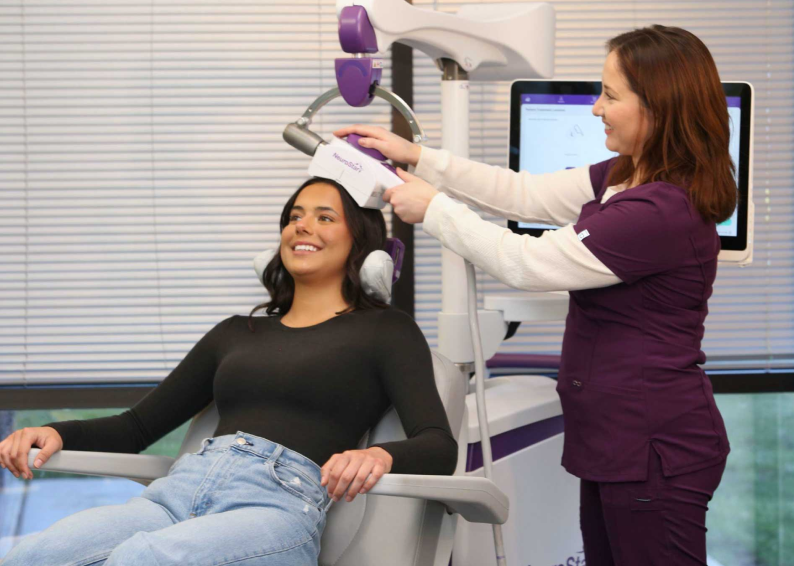
TMS Billing Services Cover

TMS Billing Codes: CPT 90867, 90868 and 90869

TMS billing codes are few, and most errors come from using the right code at the wrong visit. Three CPT codes cover the treatment itself.

CPT 90867: Initial TMS Treatment and Motor Threshold

CPT 90867 covers therapeutic repetitive TMS for the initial treatment, including cortical mapping, motor threshold determination, delivery, and management.

CPT 90868: Subsequent TMS Sessions

CPT 90868 is for each subsequent delivery and management of TMS. For each subsequent treatment, there should be a separate note detailing the date of service, the parameters used during that service, and how the patient responded to the treatment.

CPT 90869: Motor Threshold Re-Determination

CPT 90869 describes subsequent motor threshold re-determination with delivery and management. The 90869 descriptor already includes delivery and management, so we do not bill it on top of 90868 for the same session.
The psychiatric evaluation and medication visits bill under their own codes. Whether an evaluation visit can be billed on the same day as a session depends on the payer and on what the note supports, so we check each payer’s edits before the claim goes out.

TMS Prior Authorization and Medical Necessity

Most of the money you make with TMS billing comes from getting your patients approved through the TMS prior authorization process. If the documentation shows that your patient has met the payer’s requirements, then the payer will approve payment for the TMS treatment.

Documenting Failed Medication Trials

Medicare contractors and commercial payers typically seek confirmation of the diagnosis along with documentation of previous unsuccessful treatments or those which were not tolerated. According to First Coast, Medicare’s adult TMS local policy requires a confirmed diagnosis of severe major depressive disorder and at least one documented failure of an antidepressant trial or a documented intolerance to medications. Commercial payers establish their own criteria; however, many will inquire into whether the patient has received psychotherapy in the past, or if they are using a rating scale to assess severity.

Ordering Provider and Referral Requirements

Under the same Medicare policy, a psychiatrist writes the TMS order after a face-to-face examination and a review of the record. The ordering provider’s name and NPI have to appear on the claim. First Coast has said it is receiving appeals because providers left the ordering psychiatrist off the claim, which is a denial that is easy to prevent.

How We Handle TMS Insurance Billing

TMS insurance billing at A2Z follows the same order for every patient, so the authorization, the sessions, and the claims stay matched.

01

Verify coverage

We will confirm your TMS benefits, as well as whether there are any visit or session restrictions, your deductible amount, and what you will owe for a copay/coinsurance.

02

Request prior authorization

The request is submitted along with the required diagnosis, treatment history, and ordering physician information that the insurance company needs.

03

Track the authorization

We write down all approved date(s), the number of approved session(s), and which code(s) will be used. Also, we note when a course is nearing its limit.

04

Code every session

The 90867, 90868, and 90869 codes come from the diagnosis that was associated with the service on your session notes.

05

Submit clean claims

Each claim carries the ordering provider and is checked against the authorization before it goes out.

06

Post and reconcile

Payments are posted against the contract, and underpaid claims go to follow-up.

07

Work denials

Denied claims are traced to the cause and appealed with the right documents.

TMS Claim Denials and Appeals

TMS claim denials follow patterns. A course produces many claims for one patient, so one mistake can repeat across the whole course if no one catches it early.

Denial cause What it looks like What we do
No authorization or lapsed authorization
Sessions billed after the approved dates or beyond the approved count.
Track dates and counts, and request an extension before the limit is reached.
Ordering provider missing
The claim has no referring or ordering provider.
Correct and resubmit with the psychiatrist’s name and NPI.
Wrong code for the visit
90867 billed after the first session, or 90869 billed with 90868.
Correct the code from the session note.
Documentation gaps
A session note with no date, parameters, or response.
Request the completed note from the clinic and resubmit.
Timely filing
A claim filed after the payer’s deadline.
Find where the delay began and fix that step.
An appeal for a TMS claim denial is a short packet: the denial, the policy the payer relies on, the clinical record, and a plain letter that ties the two together. We prepare it and track it to a decision. Where the same denial keeps returning, we take it to the root cause through our denial management work.
TMS Billing for Medicare

TMS Billing for Medicare, Medicaid and Commercial Payers

Each payer type will treat TMS differently; therefore, which policy you require is dependent upon the location of the patient’s enrollment.

Medicare covers Transcranial Magnetic Stimulation (TMS) on a regional basis through the Medicare contractor responsible for the area where you live. Additionally, Medicaid coverage and prior authorization guidelines will vary based upon the specific Medicaid plan and/or the state. Commercial insurance providers develop their own medical policies and update them as necessary. Prior to submitting an authorization request to a payer, we review their current policy. If a claim is denied for a reason that was unexpected, we then re-evaluate the policy.

For patients with more than one plan, we confirm which plan is primary before the course begins.

TMS Billing for Psychiatrists and TMS Clinics

Solo Psychiatry Practices

Dedicated TMS Clinics

Multi-Location TMS Groups

Outsourcing TMS Billing to A2Z

Outsourcing TMS billing makes sense when authorizations and denial follow‑up consume more of staff time each day than the treatment. When TMS billing is outsourced, responsibility for the aspects, assessment orders, sessions, and documentation remains with the provider. However, the outsourcing company will handle the authorization process, coding, filing of claims,s collecting payment,nt and following up on denied claims.

A2Z integrates into the Electronic Health Record (EHR) system, providing role‑based security under a Business Associate Agreement. No migration of data is required to use A2Z. In addition to EHR integration, A2Z provides reports on authorization requests, claim submissions, payment processing, denial management, and unpaid accounts.


Outsourcing TMS Billing to A2Z
Choose A2Z for TMS

Why Choose A2Z for TMS Billing Services

Choose a TMS billing company by what it does before the first session, since that is where the money is decided.

Authorization first.

We build the request around the payer's own criteria and track the approval through the course.

Code-level accuracy.

90867, 90868, and 90869 are assigned from the session notes.

Denials worked to the root.

We trace each denial to its cause and fix the step that caused it.

Our team holds Certified Professional Biller (CPB), Certified Professional Coder (CPC), Certified Physician Practice Manager (CPPM), and Certified Professional Compliance Officer (CPCO) credentials.

Get Started with TMS Billing

Send us your current TMS caseload, and we will show you where your authorizations and claims stand.

Frequently Asked Questions (FAQs)

TMS billing is the process of getting paid for transcranial magnetic stimulation. It includes verifying coverage, getting prior authorization, coding each session, submitting claims with the ordering provider, posting payments, and working denials.
Three CPT codes cover the treatment: 90867 for the initial treatment including cortical mapping and motor threshold determination, 90868 for each subsequent session, and 90869 for subsequent motor threshold re-determination with delivery and management.
Many insurance companies provide coverage for Transcranial Magnetic Stimulation (TMS), provided the patient meets specific criteria. Most often, these criteria include a confirmed diagnosis of depression and a prior course of unsuccessful treatment. For Medicare, there are variations based upon the geographic location of the contractor.
The common causes are missing or lapsed authorization, medical necessity not shown in the record, the ordering provider left off the claim, the wrong code for the visit, and thin session notes.
Most payers require it, and Medicare coverage depends on local policy. We confirm the requirement for each payer and plan during the benefit check, before the first session.
It depends on the payer's edits and on what the note supports. We check each payer's rules before the claim goes out, and the note has to show that the evaluation was a separate, necessary service.
It makes sense when authorization work and denials are using time your staff needs for patients.
Access to your EHR or practice management system under a business associate agreement, your payer list, your TMS fee schedule, and a list of patients currently in a course. We tell you what we need before we start.

Get Your Free Billing Quote Today!

Get A Free Practice Audit