Dental implants represent one of the more complicated areas of dental insurance billing. A patient may have an Aetna dental plan, but that does not automatically mean the plan covers every part of an implant treatment plan.
For dental practices, successful Aetna implant billing starts well before the claim reaches the payer. Your team needs to verify the patient’s specific benefits, determine whether the implant procedure qualifies for coverage, review applicable exclusions and limitations, document the clinical need, submit the correct current CDT codes, and understand how the plan handles related procedures such as bone grafting and restorative work.
Aetna’s own policy guidance makes one point especially important: medical necessity and coverage are not the same thing. Aetna states that its Dental Clinical Policy Bulletins help administer benefits, but the member’s specific benefit plan determines what the plan covers, excludes, or limits. A service can meet Aetna’s medical necessity criteria and still fall outside the member’s benefits.
This guide focuses on the practical side of Aetna dental implant coverage, documentation, coding, claims, and reimbursement for dentists, oral surgeons, prosthodontists, dental billing teams, and revenue cycle professionals.
Does Aetna Cover Dental Implants?
The answer depends on the patient’s specific plan and the reason for the implant procedure.
Aetna’s published medical plan policy states that dental implants generally do not receive coverage under medical plans unless the member’s certificate of coverage specifies otherwise. The policy also explains that most medical plans do not cover routine replacement of teeth through surgical placement of a dental implant body. However, some plans may cover replacement of teeth resulting from a non-biting injury.
This distinction matters because a dental practice should never assume that a patient’s Aetna coverage automatically includes implants.
The patient’s coverage may depend on:
- The specific Aetna dental plan.
- The patient’s eligibility on the date of service.
- Whether the dentist participates with the applicable network.
- The reason for tooth loss.
- Whether the procedure falls under a covered benefit.
- Implant exclusions.
- Missing tooth clauses.
- Replacement limitations.
- Frequency limitations.
- Waiting periods.
- Annual or lifetime benefit maximums.
- Alternate benefit provisions.
- Prior authorization or predetermination requirements.
- Coverage for related procedures.
A practice should therefore verify the benefit before telling a patient that Aetna will pay for an implant.
The Most Important Rule: Verify the Patient’s Actual Plan
Aetna offers multiple dental and medical plan designs.
The coverage rules for one member may not apply to another.
Aetna states that its Dental Clinical Policy Bulletins do not constitute a complete description of a member’s benefits. The member’s actual benefit plan determines coverage, exclusions, and limitations.
Your verification process should answer several questions before treatment begins.
Coverage Verification Checklist
Confirm:
- Is the patient’s Aetna coverage active?
- What type of dental plan does the patient have?
- Does the plan cover dental implants?
- Does the plan exclude implants?
- Does the plan cover the implant body?
- Does it cover the abutment?
- Does it cover the implant supported crown or prosthesis?
- Does it cover bone grafting?
- Does it cover sinus augmentation?
- Does it have a missing tooth clause?
- Does it impose a waiting period?
- Does it have a replacement limitation?
- Does it apply an alternate benefit?
- Does the patient’s annual maximum apply?
- Does the plan have a separate implant lifetime maximum?
- Does the patient have remaining benefits?
- Does the procedure require predetermination?
- Does the patient’s dentist participate in the applicable network?
- Does the plan require a referral or authorization for related services?
Do not rely solely on information printed on the patient’s insurance card.
The card identifies the member and plan. A proper benefits verification provides the information your team needs to determine how the plan may process the specific treatment.
Aetna Dental Implant Coverage: What Does the Plan Actually Cover?
An implant treatment plan often involves several separate stages.
For example:
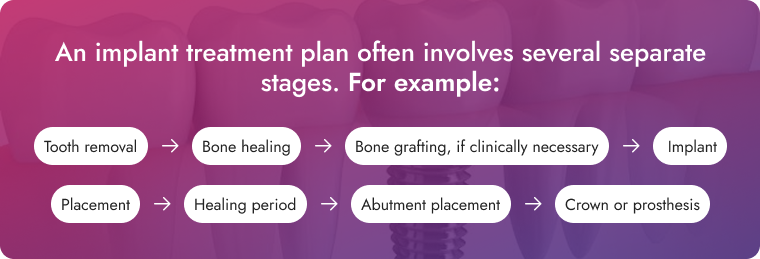
The insurance plan may treat each stage differently.
A plan could cover one procedure and exclude another.
For example, the plan might cover a tooth extraction but exclude implant placement.
It might cover an implant crown but not the surgical implant body.
It might cover a bone graft under certain clinical conditions but exclude the implant itself.
Aetna’s published medical policy illustrates this distinction. For medical plans that cover routine dental implants, Aetna states that coverage may apply only to the surgical placement of the implant body, while the restorative procedure that replaces the missing crown remains a dental expense.
This is why providers should verify each component separately.
Aetna Dental Implant Coverage and Missing Teeth
A missing tooth clause can affect implant coverage.
Some dental plans limit coverage when the tooth became missing before the patient’s coverage started.
For example, a plan may exclude replacement of a tooth that the patient lost before enrollment.
The exact wording depends on the plan.
When verifying benefits, ask the payer whether a missing tooth limitation applies to:
- The implant body.
- The abutment.
- The implant crown.
- The bridge or prosthetic component.
- Related services.
Document the payer’s response in the patient’s account.
If the representative provides a reference number, record it.
If the payer requires a predetermination, complete that process before treatment when practical.
What Documentation Does Aetna Need for Dental Implant Claims?
Aetna does not use one universal documentation checklist for every implant claim because coverage depends on the member’s plan and the specific service.
However, dental practices should maintain complete clinical records that support the procedure billed.
Your documentation should generally establish:
- The patient’s diagnosis.
- The tooth or site involved.
- The reason for tooth loss.
- The clinical condition of the site.
- The treatment plan.
- The medical or dental necessity of the procedure.
- The planned implant treatment.
- Relevant alternatives considered.
- Relevant radiographic findings.
- The relationship between the diagnosis and procedure.
- The date of service.
- The provider who performed the procedure.
When appropriate, include:
- Periapical radiographs.
- Panoramic images.
- CBCT images.
- Intraoral photographs.
- Periodontal findings.
- Clinical examination notes.
- Surgical notes.
- Treatment plans.
- Laboratory documentation.
- Prosthetic planning records.
The documentation should support the procedure you actually performed.
Do not submit every available record simply because more documentation exists.
Send the documentation that directly supports the claim and addresses the payer’s requirements.
Clinical Documentation for Implant Placement
For the surgical placement of an implant, the clinical note should clearly explain what the provider did.
A useful surgical record may include:
- Date of surgery.
- Tooth or edentulous site.
- Diagnosis.
- Reason for implant placement.
- Local anesthetic used.
- Surgical approach.
- Flap or tissue management.
- Osteotomy preparation.
- Implant system and manufacturer.
- Implant dimensions.
- Implant placement details.
- Primary stability, when documented.
- Bone quality or quantity findings.
- Bone grafting, if performed.
- Membrane placement, if performed.
- Sutures.
- Complications.
- Postoperative instructions.
- Follow up plan.
The exact content should reflect the procedure performed and the provider’s clinical documentation requirements.
A claim should never contain information that conflicts with the clinical record.
Radiographic Documentation for Dental Implants
Radiographs can help demonstrate the clinical circumstances supporting implant treatment.
Depending on the case, the record may include:
- Periapical imaging.
- Panoramic imaging.
- CBCT imaging.
A practice should follow applicable radiation safety requirements and payer documentation rules.
If a payer requests radiographs during claim review, provide the relevant images and a concise explanation when necessary.
For implant cases involving bone grafting, radiographic documentation can become particularly important.
Aetna’s Bone Graft Policy states that coverage may be available under dental or medical plans for certain dental in nature oral surgery procedures and that necessity and appropriateness may depend on corresponding diagnostic information and clinical rationale. The policy specifically lists D6104 for bone grafting at the time of implant placement and D7953 for ridge preservation.
Dental Implant CDT Codes: What Providers Should Know
Dental practices should use the current CDT code set and select the code that accurately describes the procedure performed.
The American Dental Association maintains the CDT Code, which provides the standard terminology for reporting dental procedures. The ADA updates the code set annually, so practices should avoid relying on outdated code lists or old billing templates.
Common implant related CDT codes may include codes for:
- Implant placement.
- Implant supported prosthetic components.
- Implant crowns.
- Implant supported bridges.
- Implant supported dentures.
- Bone graft procedures.
- Related surgical procedures.
The exact code depends on the procedure.
For example, Aetna’s current Bone Graft Policy lists D6104 for bone grafting at the time of implant placement and D7953 for bone replacement graft for ridge preservation per site.
The practice should always confirm the current CDT code descriptor before billing.
Do not choose a code simply because it produces a higher reimbursement.
Code based on the service actually performed.
Aetna also states that its policy bulletins reference standard code sets to assist with billing and payment, but providers should use the most appropriate code effective on the date of submission and avoid unspecified or nonspecific codes when a more accurate code exists.
Common Implant Related Procedures That Require Careful Billing
An implant case may involve several separate procedures.
Your billing team should review each one individually.
Implant Placement
The surgical placement of the implant body represents the surgical stage of treatment.
The claim should identify:
- Correct tooth or site.
- Appropriate CDT code.
- Date of service.
- Diagnosis.
- Relevant documentation.
Bone Grafting
Bone grafting may occur before or during implant placement.
The reason for the graft matters.
Aetna’s Bone Graft Policy states that bone grafting associated with implants may receive coverage when the clinical situation demonstrates medical necessity, such as when normal healing cannot reasonably address the existing defect.
Your documentation should explain why the graft was necessary.
Avoid vague statements such as “bone graft needed.”
Instead, document the actual clinical findings that support the procedure.
Ridge Preservation
Ridge preservation represents a separate service from every other form of bone grafting.
Your billing team should confirm the exact procedure performed and select the appropriate current CDT code.
Abutment Placement
The abutment connects the implant body to the final restoration.
Coverage depends on the patient’s plan.
Do not assume that coverage for the implant body automatically means coverage for the abutment.
Implant Crown
The final crown represents the restorative phase.
The plan may process this separately from the surgical implant placement.
Review the patient’s prosthodontic and restorative benefits before treatment.
Aetna Dental Implant Predetermination and Preauthorization
Dental practices often use the terms “predetermination,” “preauthorization,” and “precertification” interchangeably.
They do not always mean the same thing.
Before treatment, your team should ask Aetna what process applies to the patient’s specific plan.
A predetermination can help the provider and patient understand how the plan expects to process a proposed service before treatment occurs.
However, an estimate or predetermination does not necessarily guarantee final payment.
The final claim can still process differently based on:
- Eligibility changes.
- Benefit exhaustion.
- Claim coding.
- Documentation.
- Plan limitations.
- Contractual adjustments.
- Changes in coverage.
- Actual services performed.
Always explain this distinction to patients.
What to Submit with an Aetna Implant Predetermination
When the payer requests supporting documentation, the practice may need to provide:
- Completed claim or predetermination form.
- Treatment plan.
- Tooth number or site.
- Diagnosis.
- Clinical narrative.
- Current radiographs.
- Relevant photographs.
- Proposed CDT codes.
- Proposed fees.
- Proposed treatment sequence.
- Documentation of previous treatment, when relevant.
For complex cases, add a concise narrative explaining the clinical rationale.
The narrative should answer:
- What is wrong?
- Why does the patient need treatment?
- Why did the provider choose this treatment?
- What procedure will the provider perform?
- What evidence supports the need?
Keep the narrative factual.
Avoid unnecessary medical language that does not help the payer understand the claim.
How to Bill Aetna for Dental Implant Procedures
Once the provider completes the procedure, the practice should submit the claim using the appropriate current CDT code set and claim format.
The claim should include accurate:
- Patient information.
- Member ID.
- Group information, when required.
- Provider information.
- NPI.
- Tax identification information.
- CDT procedure codes.
- Tooth numbers.
- Surface information, when applicable.
- Dates of service.
- Fees.
- Diagnosis information when applicable.
- Supporting documentation.
The claim should match the patient’s clinical record.
If the provider billed for implant placement, the documentation should support implant placement.
If the provider billed a bone graft, the record should support the graft.
If the provider billed a prosthetic restoration, the documentation should support the restoration.
Consistency matters.
How to Improve Aetna Dental Implant Claim Accuracy
Before submitting the claim, run a detailed review.
Patient Information
Check:
- Name.
- Date of birth.
- Member ID.
- Group number.
- Address.
Provider Information
Confirm:
- Billing provider.
- Rendering provider.
- NPI.
- Tax ID.
- Practice location.
- Network participation.
Procedure Information
Verify:
- CDT code.
- Date of service.
- Tooth number.
- Site.
- Procedure description.
- Fee.
Clinical Support
Confirm that the record contains:
- Diagnosis.
- Clinical findings.
- Radiographs, when relevant.
- Treatment rationale.
- Surgical documentation.
Coverage
Confirm:
- Active eligibility.
- Implant benefit.
- Exclusions.
- Missing tooth clause.
- Waiting period.
- Annual maximum.
- Remaining benefits.
- Frequency limitations.
- Alternate benefit.
- Predetermination status.
This review can catch errors before the claim reaches Aetna.
Aetna Dental Implant Reimbursement: What Providers Should Expect
There is no single Aetna reimbursement rate for dental implants.
Payment depends on several factors.
These can include:
- The patient’s plan.
- The provider’s network status.
- Contractual fee schedule.
- Procedure code.
- Allowed amount.
- Patient deductible.
- Coinsurance.
- Annual maximum.
- Implant coverage.
- Plan exclusions.
- Benefit limitations.
- Coordination of benefits.
This means two patients can receive the same implant procedure from the same dentist and receive different insurance payment outcomes.
A patient’s plan may also limit how much the insurer pays toward implants during a benefit period.
Therefore, practices should not quote a reimbursement amount based solely on the procedure code.
How to Calculate Expected Aetna Dental Implant Reimbursement
Suppose a hypothetical patient’s plan has:
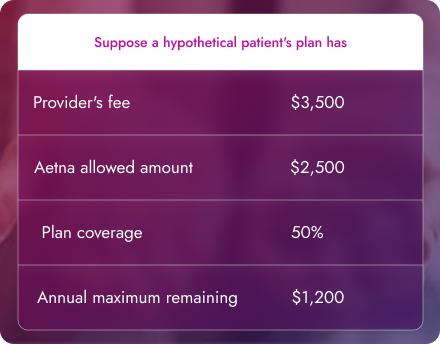
The theoretical insurance benefit could equal $1,250 based on the allowed amount and coverage percentage.
However, the annual maximum could limit the actual payment to $1,200.
The patient’s responsibility could then include the remaining amount based on the plan’s benefit structure and contractual rules.
This example demonstrates why providers should verify:
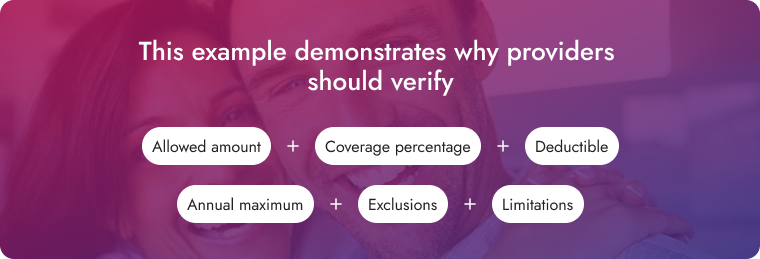
before estimating patient responsibility.
Do not promise the patient a specific reimbursement amount unless the plan provides a definitive payment guarantee, which most benefit estimates do not.
Why Aetna Dental Implant Claims Get Denied
Dental implant claims can face denials for many reasons.
Common issues include:
Implant Exclusion
The plan excludes implants.
Verify the benefit before treatment and discuss alternatives or patient responsibility with the patient.
Missing Tooth Limitation
The plan excludes replacement of a tooth that the patient lost before coverage began.
Verify the missing tooth clause during benefits verification.
Waiting Period
The patient has not completed the required waiting period.
Check the plan’s effective date and applicable waiting period before treatment.
Annual Maximum Exhausted
The patient has already used the available annual benefit.
Check benefit accumulators before scheduling major treatment.
Incorrect CDT Code
The claim contains a code that does not accurately describe the procedure.
Review the current CDT code set and the operative documentation.
Missing Documentation
The payer requests clinical records, radiographs, or treatment information.
Respond promptly with relevant documentation.
Lack of Clinical Rationale
The submitted record does not explain why the procedure was necessary.
Provide a clear narrative supported by clinical findings.
Incorrect Tooth Number
The claim identifies the wrong tooth or site.
Compare the claim with the treatment plan and clinical record before submission.
How to Appeal an Aetna Dental Implant Denial
If Aetna denies an implant claim, start by reviewing the explanation of benefits or denial notice.
Identify the exact reason.
The denial may involve:
- Noncovered service.
- Plan exclusion.
- Missing tooth limitation.
- Documentation issue.
- Coding issue.
- Benefit maximum.
- Eligibility.
- Lack of authorization or predetermination.
- Lack of clinical support.
Do not submit a generic appeal.
Address the exact reason for the denial.
For example, if the payer denied a bone graft because the submitted documentation did not establish clinical necessity, the appeal should include the relevant diagnostic findings and a clear explanation of why the graft was necessary.
If the payer denied the implant because the plan excludes implants, an appeal based solely on medical necessity may not overcome the contractual exclusion.
The practice should first determine whether the denial involves a clinical determination or a benefit exclusion.
That distinction can save time.
Final Thoughts
Aetna dental implant billing requires more than selecting an implant CDT code and sending a claim.
Aetna’s policy guidance does not replace the patient’s benefit plan.
Aetna states that its Dental Clinical Policy Bulletins help administer benefits but do not constitute a complete description of coverage. The actual benefit plan determines whether a service receives coverage.
For dental practices, this means the best way to improve implant reimbursement involves combining accurate benefits verification, strong clinical documentation, correct CDT coding, complete claims, and disciplined denial management.
Struggling With Aetna Implant Claims and Dental A/R?
Dental implant cases can create some of the most complicated billing challenges in a dental practice. Coverage limitations, missing tooth clauses, benefit maximums, documentation requests, coding errors, and denials can quickly turn a high value treatment plan into a long outstanding account.
A2Z Medical Billing can help dental practices manage the billing work behind complex procedures.
From insurance eligibility and benefits verification to dental claim submission, documentation support, denial management, payment posting, and A/R follow up, our team can help your practice build a cleaner billing process and reduce avoidable revenue delays.
Don’t let complicated implant claims keep your revenue tied up.
Frequently Asked Questions
Does Aetna cover dental implants?
Some Aetna dental plans may cover dental implant services, while others exclude them or impose limitations. Coverage depends on the patient’s specific benefit plan.
Aetna’s medical plan policy states that dental implants generally remain excluded under medical plans unless the applicable certificate of coverage provides an exception.
Does Aetna cover the entire cost of a dental implant?
Not necessarily.
Even when a plan covers implants, the patient may have a deductible, coinsurance, annual maximum, or other limitations.
The plan may also process the implant body, abutment, and crown differently.
Does Aetna cover bone grafting for dental implants?
Coverage depends on the plan and clinical circumstances.
Aetna’s Bone Graft Policy states that coverage may be available for certain bone graft procedures when the clinical situation supports medical necessity. The policy lists D6104 for bone grafting at the time of implant placement and D7953 for ridge preservation.
Does Aetna require predetermination for dental implants?
Requirements depend on the member’s specific plan.
Providers should verify whether predetermination or another review process applies before beginning treatment.
Does Aetna cover implant crowns?
Coverage depends on the patient’s dental plan.
The practice should verify the restorative benefit separately from surgical implant placement.
Will Aetna pay for a dental implant if the tooth resulted from an accident?
Possibly, depending on the plan and circumstances.
Aetna’s published medical policy notes that most traditional medical plans cover replacement of teeth resulting from a non biting injury, but providers must review the specific plan’s terms and applicable coverage requirements.
